Showing posts with label OMS Food. Show all posts

Monday, 18 February 2013

Homemade Toasted Muesli

Honestly, since I have learned to make my own toasted muesli and discovered how tasty it is and how easy it is to make, I will never buy packaged cereal again.


This is a really healthy (and OMS friendly) way to start the day.

Ingredients
4 cups wholegrain rolled oats (I use Lowmans)
1 cup of mixed nuts and seeds*
1 cup dried fruit*
120 ml (6 tbsp) maple syrup, runny honey or agave nectar
40 ml (2 tbsp) extra-virgin olive oil


Method

Place the rolled oats, maple syrup and olive oil into a bowl and toss to combine.

Spread the mixture onto 2 baking trays lined with parchment paper.

Bake in the oven at 180C/350F  or  160C/320F fan forced for 5-7 minutes.

Roughly chop the nuts and add them to the oats, giving them a good stir to ensure they brown evenly.  Cook for another 5-10 minutes.  All ovens vary, so just keep an eye on it.  Burnt oats and nuts taste terrible.  Remove the trays from the oven and allow the mixture to cool.


Add the dried fruit to the oat and nut mixture, and thoroughly mix.


I store my toasted muesli in an air-tight plastic cereal container.  It will last a few weeks, but I usually eat it all before then.


Notes & Variations:
This is a really flexible recipe.  You can easily adapt it to suit your own taste.
Apart from oats, you can also add rolled rice, or unprocessed wheat bran.
Nuts & Seeds
Use any mix of the following:

  • cashews
  • almonds
  • hazelnuts
  • walnuts
  • brazil nuts
  • macadamias
  • pecan nuts
  • pepitas (pumpkin seeds)
  • poppy seeds
  • sesame seeds
Dried Fruit
Use any mix of the following:
  • raisins
  • sultanas (buy the natural ones without added oil)
  • currants
  • craisins (dried cranberries)
  • chopped dried apricots
  • chopped dried apple or mango
  • chopped dried fig
  • goji berries
Extras
You can sprinkle over chia seeds or ground flax seeds at the time of serving.  Add a dollop of yoghurt (I make my own soy yoghurt), or add fresh fruit.
If you want some extra spice, you can add a sprinkle of cinnamon to the oats when you toast them.

I find a ratio of 4 parts oats, 1 part nuts and seeds, and 1 part dried fruit works for me.  You may wish to make it heavier or lighter.

I also find that 120ml of maple syrup is sweet enough for me, but you may choose to use more or less.  If you use agave nectar, reduce the amount slightly.  If you use honey, a runny honey is best.

Interesting Facts

I would call this Granola, but the name 'Granola' is trademarked in Australia and New Zealand by Sanitarium.  Granola is just rolled oats, nuts and honey that have been baked as a breakfast cereal, but only Sanitarium can all it that, so let's call this toasted muesli.

A friend of mine who has spent a number of holidays in Switzerland told me that the cereal aisle of the supermarkets there are completely different to ours.  There are virtually no pre-packaged cereals in boxes.  Instead the aisle is filled with all the ingredients people need to make their own muesli.  Interesting huh?

If you've never made your own muesli before, I urge you to give it a try.  It's also a great way to use up all the left over dried fruit that I used to make my OMS Christmas Pudding.


post signature

Monday, 4 February 2013

Spaghetti with Clams and Mussels

The other week, I shared my Spanish Seafood Paella recipe with you.  When I buy the pot-ready mussels and clams for the paella, I buy them in a vacuum packed 1kg bag, and there are more in the pack than I need for the paella which means the night after paella is clam and mussel spaghetti night.


Spaghetti Vongole is spaghetti with clams.  You can also make this dish just with mussels, but I made it with both as I had them left over and didn't want to waste them.

Ingredients  (serves 4)
500+ grams baby clams (vongole, pippis)
500+ grams pot-ready mussels
300-400 grams spaghetti (wholemeal preferable)
1/2 cup 125ml dry white wine (or use water or stock)
2-3 cloves garlic, crushed
3 tomatoes, peeled, de-seeded and diced
1 small red chilli,  seeded and finely diced (optional)
Extra-virgin olive oil (EVOO)
2 tablespoons chopped parsley
salt, pepper and lemon wedges to serve


Method

Prepare your clams and mussels.  I usually soak the clams in cool salted water for an hour, then rinse and drain.  The mussels are pot-ready and can go straight in.  Discard any that do not close when tapped.


Bring a large saucepan of salted water to a rapid boil, then add the spaghetti.  Cook for the recommended time with the water constantly at a rolling boil.  Set the timer - mine usually takes 11-12 minutes.  I'd run out of wholemeal, so used normal white spaghetti.


While the pasta is cooking, gently heat a small amount of EVOO in a non-stick fry pan, and  sweat the garlic for a couple of minutes.  Add the wine and turn up the heat.

With about 4-5 minutes to go on the pasta, add the clams to the fry pan and cover with a lid. Shake the pan from time to time.


With 3-4 minutes to go on the pasta, add the mussels to the fry pan and cover with a lid.


When the pasta is cooked, drain it.  Now you can either add the spaghetti to the pan with the mussels and clams, or if you are worried the clams have left some sand/grit in the cooking liquid, put the pasta back in the saucepan and add the mussels and clams to the pasta, then pour over some strained cooking liquid.  Toss through the tomatoes and chilli and season with salt and pepper.  Discard and clams or mussels that do not open.  Serve with lemon wedges.


It is good to have some crusty bread on hand to soak up all the juices.


Notes & Variations
You can also add diced zucchini (courgette) to increase the vegetables.
You can make it just with clams (vongole), just with mussels, or with both.
If I don't have any chillis, I use Chilli infused EVOO and drizzle it over at the end.
The quantities I've given are a rough guide.  Adjust them to suit your needs and tastes.
You can replace the tomatoes with tinned tomatoes if you want more of a tomato base, or you can leave the tomatoes out entirely and just use the wine and garlic.
To make the classic Moules Marinieres just steam the mussels as above, replacing the garlic with a couple of French shallots, diced, and add some thyme and a bay leaf. Serve with crusty bread or oven-baked fries instead of pasta.  You can also steam mussels in beer, like they do in Belgium.

Mussels in Brussels - well, it's actually Brugge in Belguim - June 2009


To learn how to purge (remove sand from) clams and mussels see the Sydney Fish Markets web site here.

Interesting Facts
Vongole is Italian for clams.
In Italy Parmesan cheese is never added to seafood.  It just isn't done.
Mussels need to steam rather than boil, so don't add to much liquid to the pan.  The mussels release their own liquid when they open which adds flavour to the dish.

post signature

Monday, 21 January 2013

My Borough Market Seafood Paella


Whilst living in London, my family were fortunate enough to visit Spain where we ate the famous Spanish dish of paella several times.  Keen to recreate the dish when we returned to London, we headed to the Borough Markets where we bought a traditional paella pan and all the ingredients we needed to make our version of the dish.


Now I am not Spanish, and make no claims that this is an authentic or traditional dish.  It is just my version of the dish inspired by my trips to Spain, and by the wonderful produce available at the Borough markets, that I sadly no longer have access to.

Ingredients (for a 6 person pan)
Sofrito
1 Spanish onion, diced
2 cloves of garlic, chopped
2-3 tomatoes, peeled, de-seeded and chopped
6 piquillo or piquante peppers (from jar, drained and chopped) or 1 red capsicum, diced
2 teaspoons extra-virgin olive oil (EVOO)
Rice
1 1/2 cups Calasperra or Bomba, Spanish paella rice
3 cups (750ml) stock - fish or vegetable
100ml dry white wine (optional)
Seafood & Vegetables
You can use any mix of seafood you like, I used:
12 live clams (pippis, vongole)
12 pot-ready live mussels
1-2 tubes of calamari, cleaned and cut into strips
12 green prawns, peeled and de-vained with tails intact
a handful of green beans (or peas if you prefer)
Seasoning
1 tablespoon pimento (Spanish smoked paprika)
a pinch of saffron threads (1 teaspoon)
2-3 lemons cut into wedges
handful of parsley, chopped
salt flakes & freshly cracked black pepper

Preparation


  • Get all of your ingredients together.
  • Prepare your seafood.  I buy pot-ready clams and mussels, so they don't need much preparation.  I soak the clams in cold salted water for an hour or so, then rinse them just to remove any remaining sand or grit in them.  If your mussels aren't pot ready, you will need to scrub them and remove beards.  Discard any open mussels that don't close when tapped.
  • Blanch the green beans - I put them in a pyrex bowl, boil the kettle, pour boiling water into the bowl and leave for 10 seconds, then I drain the beans and run them under cold water.  Blanching the beans just keeps them looking green when you cook them.  You don't have to do this step.
  • Peel, de-seed and chop the tomatoes.
  • Put 1 teaspoon of saffron threads in a small dish and add 1 tablespoon of boiling water or stock, leave to infuse.
  • Place the stock in a saucepan and heat gently so it is hot when you add it to the paella pan.


Cooking
Heat the paella pan and gently sweat the onion and garlic in EVOO for 3-4 minutes.


Add the peppers or capsicum and the tomatoes.  Continue to cook slowly for another 3-5 minutes.


Add the paprika and stir.
Turn up the heat.
Add the wine and cook for a minute or so.
Add the warm stock and saffron and bring to the boil.
Add the rice and give it a good stir to make sure it is covered and evenly distributed.  This is the last time you will stir the paella so put the spoon away.  I usually add the calamari strips now.
Reduce the heat a little and cook the rice uncovered for around 15 minutes, until it is almost tender.


Arrange the clams, mussels, prawns and green beans (or peas) evenly around the paella pan.  You can press them down into the rice with the back of a spoon if you wish.


Cover with tin foil or a lid and cook for 5-7 minutes, until the mussels and clams open up and the rice and prawns are cooked.  You can turn the heat up for the last few minutes cooking time to ensure all the liquid is absorbed and a crust forms on the bottom of the pan.
Remove the paella from the heat and let it rest, covered for 5-10 minutes.


Squeeze lemon juice and scatter chopped parsley over the top before serving.  The idea is that when you serve the paella, you divide it into 6 'wedges' and each person should receive the same amount of rice and seafood.


Notes & Variations
Other seafood you can include - any firm white fish cut into pieces, cuttlefish in place of calamari, crab claws.

To add more flavour to your fish or vegetable stock, you can fry the prawns shells in a pan until they turn red.  Add your stock, and bring to the boil.  Reduce heat and simmer uncovered for 20 minutes, then strain through a fine sieve into a jug or bowl.  Discard the prawn shells.  A good tasting stock is vital to make a good-tasting paella.

According to SBS Food, the perfect time to add seafood to paella is when enough of the stock has been absorbed to allow the rice to be seen.  A true paella isn't overloaded with seafood so the rice is the main feature, but we love seafood so we up the quantities.

Piquillo peppers are small red peppers grown in northern Spain, that are roasted, peeled, de-seeded and sold in jars. Piquante peppers are from South Africa.   They are not traditionally used in paella, but I like them.  When you bite into one, they taste sweet, followed by a mild heat.  Delicious.  Substitute with red bell peppers/capsicum.

If you can't get paella rice, substitute with risotto rice.

Interesting Facts
Firstly, Australians need to learn to pronounce it correctly.  It is not pay-ella, but  [paˈeʎa]  - the 'l' is pronounced more like a 'y'.

A good paella should have a crust of rice called the socarrat on the bottom of the pan.  This can be achieved by cooking the paella over a gas flame or open fire. Traditionally paella is a summer dish, cooked by men in a flat pan set over a charcoal or wood fire, outside.  We use a paella pan, and my husband cooks it outside on the BBQ, to ensure good heat under the whole pan.  If you don't have a paella pan, use a wide flat frypan.  You can also buy special paella gas rings to ensure heat under the whole pan if you have a gas burner.


This is a great dish for entertaining, and although my husband cooks it for me for my birthday or when he's at home on summer holidays, you don't have to save it for special occasions.

post signature

Wednesday, 5 December 2012

Frozen Fruit Sorbet

Being dairy-free, sorbet is my ice-cream, and I just love a fresh frozen fruit sorbet in summer.


Master Recipe for Sorbet
Ingredients:
1  1/2 cups (375ml) fruit juice or pureed fruit
1 cup sugar syrup
1 tablespoon lemon/lime juice (optional), for tartness
1 tablespoon alcohol (optional), see notes
This recipe makes just under 1 litre/1 quart of sorbet and can easily be doubled

Method:
Put your fruit juice/puree in a jug or bowl and taste for natural sweetness.  Add the lemon/lime juice & alcohol if using.  Gradually add sugar syrup to the fruit until you achieve the desired sweetness.  Remember the taste will dull slightly when freezing.  Chill the mixture in the fridge.

When cold, add the mixture to an ice-cream machine and churn until frozen.  Transfer to a container and store in the freezer.


If you do not have an ice-cream maker, place the mixture into a large shallow container, and freeze for 2-3 hours.  Transfer the mixture to a food processor and puree (you do this to add air to the sorbet).  Return the mixture to the container and place back in the freezer.  Freeze until firm.


Using Sugar Syrup
Light Sugar Syrup - 2 parts water to 1 part caster (granulated) sugar
Heavy (Simple) Sugar Syrup - 1 part water to 1 part caster (granulated) sugar.
Light syrups are generally used for poaching fruit, and heavy syrups for making sorbet, but you can choose.

To make sugar syrup, place the sugar and water in a saucepan and stir to dissolve the sugar.  Heat to a gentle boil and simmer for 5 minutes without stirring.  Remove from the heat.  Allow to cool and store covered in the fridge (preferably in glass).


Flavouring Syrups - To flavour the sugar syrup, you can add a vanilla bean, citrus zest, cinnamon sticks, aromatic herbs.  Leave to infuse in the syrup then strain.  You can leave the zest in when making sorbet.

Just Using Sugar
You can also make sorbet by adding sugar directly to the fruit juice. Gently heat just enough fruit juice to cover the sugar until sugar dissolves, then add it to the remaining fruit juice.  David Lebovitz works on a ratio of 1 cup juice to 1/4 cup (50g) caster (granulated) sugar.

A Trio of Sorbets

Here are the fruit bases for the three sorbet's I made.

Mixed berry - 2 cups of mixed frozen berries pureed in the food processor with a couple of tablespoons of sugar syrup to make it more liquid.  Strain the mixture through a sieve to remove the seeds (a conical strainer really helps with this).


Mango & passion fruit - 1 mango (approx 500g/1lb) peeled and chopped then process in a food processor to a puree.  Makes approx 1 cup puree. Add half a cup of passion fruit strained.  It was a little too early for fresh passion fruit when I made this but a 170g/6oz can will give you approx 1/2 cup of juice.


Kiwi fruit - peel & chop 10 kiwi fruit.  Process in a food processor with a little sugar syrup.  Do not over process or the seeds can impart a bitterness.


Sorbet Flavours
This is the best bit.  Once you have the hang of a basic sorbet, you can make it in so many different flavours.

Here are some flavours you can make:

  • Lemon
  • Orange
  • Lime
  • Strawberry
  • Kiwi Fruit
  • Honey Dew melon (nice with a touch of fresh ginger)
  • Raspberry
  • Cantaloupe/Rockmelon
  • Grape (red or white grape juice)
  • Papaya
  • Mango
  • Watermelon
  • Lychee and Ginger
  • Guava
  • Passion fruit
  • Grapefruit
  • Mandarin
  • Peach
  • Apple
  • Rhubarb
  • Blackberry

To save on washing up at Christmas time, why not serve the sorbet in cupcake liners.  I bought these cupcake liners and the Christmas themed toothpicks at the discount shop for only a few dollars.


Notes:
Alcohol does not freeze, so adding a small amount of alcohol to your sorbet will help to keep it soft.  Vodka will perform this task without changing the flavour of the sorbet.  Alternatively you can choose an alcohol that will add flavour.   For example Cointreau in a citrus sorbet, Midori in a melon sorbet, or Marsala in a strawberry sorbet.  Do not use alcohol if children will be eating the sorbet.  Instead, to soften the sorbet just take it out of the freezer 10-15 minutes before you wish to serve it.

You can use honey in place of the sugar syrup.  1 cup sugar syrup is 3/4 cup of honey.  This will affect the flavour and the way the sorbet freezes.

Resources - Heston explains the technical side of sorbet here

Commercially Prepared Sorbets
There are many commercially prepared sorbets available to buy.  Most are fine, just read the labels.
They may contain vegetable gums such as 410 - Locust Bean/carob gum, 412 - Guar gum, and 415 - Xanthin gum, which are used as a thickener or stabiliser (see here), and food acid 330 - Citric acid (see here)


Here's to summer holidays by the pool with refreshing sorbet treats.

That's the last of my OMS Christmas Menu.  Hope you enjoyed it.


post signature

Tuesday, 4 December 2012

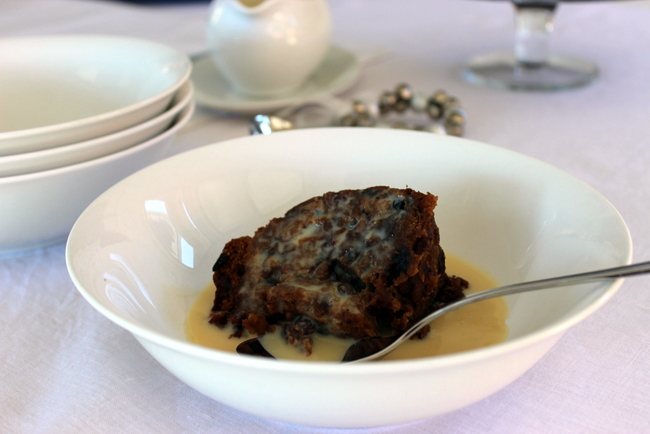
OMS Christmas Pudding - Low-fat and Dairy-free


When the Overcoming MS team asked me if I could prepare an OMS friendly Christmas menu, the biggest challenge was how to make a Christmas pudding that is low-fat, dairy-free and egg-free.  Here's what I came up with and I've got to say, it's good.  Got the big thumbs up from all my family.


Ingredients:
Dried Fruit Mix - you can use any combination of dried fruit that you like - sultanas, raisins, currants, dates, apricots, figs, prunes, mixed peel, glace cherries or cranberries.  I used 4 and 1/2 cups:
1 cup (150g/5oz) sultanas
3/4 cup (150g/5oz) raisins
1 cup (150g/5oz) currants
1 cup (150g/5oz) dried dates, chopped
3/4 cup (100g/3.5oz) dried apricots, chopped
zest of 1 lemon
1/2 cup orange juice +1/2 cup alcohol (rum, brandy) for soaking the fruit or for a non-alcohol pudding just use 1 cup of orange juice

Wet Ingredients:
1 cup dark brown sugar
2 green apples (125g,4.5oz), unpeeled and grated
1 cup orange juice - juice from 4 oranges, or use good quality juice
2 tablespoons EVOO (extra-virgin olive oil)

Dry Ingredients:
2 cups of self-raising (self-rising) flour
1 teaspoon bi-carbonate of soda (baking soda)
1 cup almond meal
2 teaspoons of mixed spice* (I used 1tsp cinnamon, 1/2 tsp allspice & 1/2 tsp nutmeg)


Method:
Place all the dried fruit, lemon zest and soaking liquid in a glass bowl, cover with clingfilm and leave to soak overnight or for a couple of days stirring regularly.  The fruit should be lovely and plump.  You can heat the mixture in a saucepan first if you like.


When your fruit is ready, grate the 2 green apples and add them to the mixture, together with all the wet ingredients.  Stir well so the sugar dissolves.


Place all the dry ingredients in a bowl and stir/whisk to combine.  Sift the dry ingredients over the top of the fruit mixture.  Gently fold the flour mixture into the fruit until it is combined.

Spoon the pudding mixture into a 2 litre pudding container until it is three-quarters full.  I bought a carbon-steel non-stick pudding bowl with a lid that locks closed, and handles which makes it so much easier.  I did cut a small piece of greaseproof paper to fit in the bottom of the bowl and lightly greased the sides with a little oil.  If you have a pyrex/ceramic bowl you will need to make a water-tight lid and string handle for it.  See instructions here.  You can also make 2 x 1 litre puddings, and freeze one for next year.


Place the pudding bowl into a double steamer, or a large saucepan with a trivet or upturned saucer on the bottom.  This stops the top of the pudding touching the bottom of the pan and burning.  Pour boiling water around the pudding bowl until it comes halfway up the sides.  Put the lid on the saucepan/steamer and simmer for about 4 hours.  You will need to keep an eye on it and top up the water when needed.  Use boiling water from the kettle.


Remove the pudding from the saucepan and leave it to cool in the bowl.  If you want to eat it straight away, leave it to cool for 30 minutes before serving.  Traditionally though, you would now store the pudding in the pantry or fridge for a month to allow the flavours to develop (make a new foil lid and string if you don't have a lidded pudding bowl).  To re-heat the pudding, steam for another hour or so.  Let it cool for 30 minutes and then serve with custard.


Vanilla Custard

2 cups Non-dairy milk - Soy, Almond, Rice, Oat
2-3 heaped tablespoons cornflour
3 tablespoons honey (to taste)
1 vanilla bean split, or 1 tsp vanilla paste/extract

Mix the cornflour with 4 tablespoons of milk until you get a smooth paste.
Heat the rest of the milk and the honey.
Scrape the seeds from the vanilla bean and add both the seeds and pod to the milk.  Continue to heat until it reaches a boil.
Add the cornflour mixture, and simmer gently for 1-2 minutes, then remove from the heat.  Stir through the vanilla extract now if you didn't use a vanilla pod.
To get the yellow colour that egg yolks normally give the custard, soak a couple of strands of saffron in hot water and stir the coloured water through the custard, or add a sprinkle of paprika.  Leave the custard to cool slightly or chill.  Remove the vanilla pod before serving.

Custard Powder Method
Add 2-3 heaped tablespoons of Foster Clark's vanilla custard powder & 1-2 tablespoons honey or sugar to 2 cups of non-dairy milk and cook in the same way as the above recipe.
Ingredients of Foster Clark's custard powder is cornflour, sugar, salt, colour (curcumin, paprika) and natural flavour.

The first 'custard powder' was invented by Alfred Bird in 1837 because his wife was allergic to eggs.  He used cornflour (cornstarch) to thicken milk, rather than eggs. (source)


Christmas Cake
I had a little bit of pudding mixture left over, so I decided to make a mini-Christmas cake out of it.

I baked it in the oven at 150C/300F for about 30-40 minutes.  If you made the whole mixture as a cake, you would probably need to bake it for around 1  1/2 hours.  Use a small skewer to test if the cake is cooked properly.

I think this cake would be delicious with blanched almonds in it.


Notes:
Mixed Spice is a British blend of spices used in fruit cakes and puddings.  It generally consists of cinnamon, nutmeg and allspice with cinnamon being the dominant flavour.  The mix may also include cloves, ginger, coriander, caraway and cayenne pepper (see here)

Traditionally Christmas pudding is made with suet which is raw beef or mutton fat.

This recipe gives a rich dense pudding.  If you want a lighter version, you could reduce the amount of dried fruit.  You can also add some chopped or whole blanched almonds to the dry fruit mixture.


Christmas Pudding History & Tradition

Traditionally in the UK, you start your Christmas pudding on Stir Up Sunday.  This is the name given to the last Sunday before the season of Advent in the Anglican church.  Stir Up Sunday was Sunday November 25th in 2012, and the 24th November 2013.  It is also tradition that every person in the household stirs the Christmas pudding mixture and makes a wish.  Often silver coins, usually a sixpence, were added to the pudding mixture.  If a person's serve of Christmas pudding contained a coin they were able to keep it, and it was thought that this would bring wealth in the coming year.  My grandmother used to add old coins to our pudding but we had to give them back so she could use them again the next year.

Here's me as an 18 year old at a Christmas pudding party in Dalkeith, Perth.
Look at the size of that bowl!


To serve a Christmas pudding you are supposed to flambe it with brandy, decorate with a sprig of holly and ceremoniously carry it to the table where it would receive a round of applause.  I like the idea of an applause.  I think I'll introduce that tradition in my family.  I'm also going to organise a big Christmas pudding party next year for stir-up Sunday, just to keep the tradition alive.

References - Stir Up Sunday at Wikipedia here, and Christmas pudding history here.


post signature
Related Posts Plugin for WordPress, Blogger...